Wondering whether a small investment property in Traverse City is a smart move? You are not alone. In a market where year-round rentals are tight and housing costs are relatively high, the right duplex, triplex, quadplex, or home with an accessory dwelling unit can offer real opportunity, but only if you understand how this local market works. This guide breaks down what counts as a small investment property in Traverse City, what rent and vacancy look like, and what to check before you buy. Let’s dive in.
What Small Investment Properties Mean Here
In Traverse City, small investment properties are not just a side category. They are a meaningful part of the local housing supply. City housing data shows that 44.1% of renter-occupied units are in structures with 1 to 4 units, and 45.1% of total rental units are non-conventional rentals such as single-family homes, duplexes, units over storefronts, and mobile homes.
That matters because it means smaller properties fit the way the local rental market already functions. In Grand Traverse County, 47.0% of renter-occupied units are in 1 to 4 unit structures. If you are looking at a duplex, triplex, quadplex, or a single-family home with an added rental component, you are looking at a property type that already plays a real role in meeting local housing needs.
Why Traverse City Is Different
Traverse City is a relatively small city inside a larger county market. The city population is estimated at 15,782, while Grand Traverse County is estimated at 96,729. For investors, the bigger takeaway is not just population size, but the cost and supply picture.
Census data shows a median owner-occupied home value of $415,400 in Traverse City and $339,400 in Grand Traverse County. Median gross rent is $995 in the city and $1,288 in the county. Put simply, this is not a low-cost market where buyers can assume easy cash flow from a bargain purchase price.
Instead, Traverse City looks more like a supply-constrained market where stable year-round demand can support small rentals, but careful underwriting matters. Local housing reports support that view. One city housing summary found 99.4% occupancy across 845 surveyed apartment units, and a county brownfield plan citing Housing North estimated rental vacancy below 1% in Grand Traverse County.
Property Types That Often Make Sense
Duplexes to Quadplexes
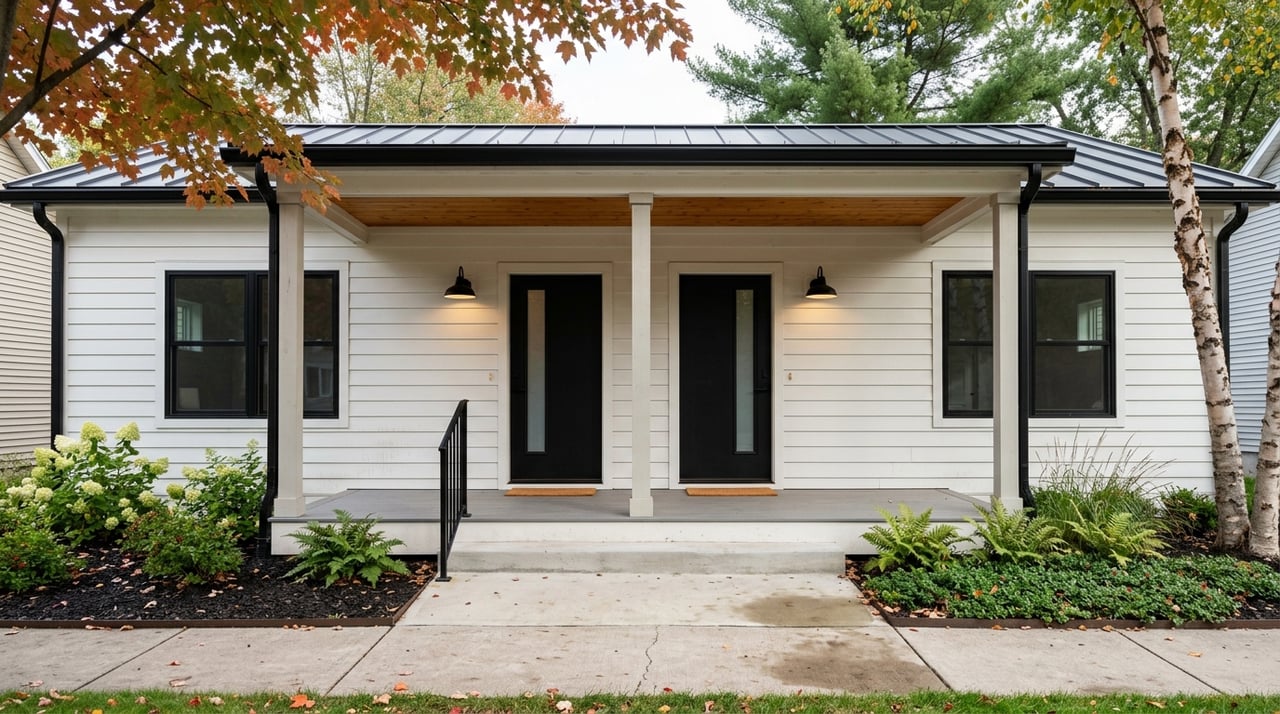
Small multifamily properties can make sense because they match how renters already live in this market. A duplex or triplex may give you multiple income streams on one lot while keeping the scale manageable. In a tight rental environment, these properties can attract steady interest if they are set up well for year-round living.
Single-Family Rentals
Single-family homes are part of Traverse City’s non-conventional rental stock. These can work well when the layout, parking, and maintenance needs support long-term tenants. They may also appeal to renters who want more privacy or outdoor space than a larger apartment building can offer.
Homes With an ADU
Accessory dwelling units, or ADUs, are especially relevant in Traverse City. City code defines an ADU as a smaller secondary home on the same lot as a principal dwelling. The city recognizes attached or internal ADUs as well as detached ADUs.
If you are considering this route, the details matter. The city’s ADU registration page states that new ADUs require registration after a certificate of occupancy, must be renewed annually, and are not available to Tourist Home License holders. That means buyers should confirm both physical setup and compliance requirements before they move forward.
What Rent Could Look Like
For small investment properties, local rent ranges are one of the most useful starting points. A Grand Traverse County survey of available non-conventional rentals found the following asking ranges:
- One-bedroom units: $1,199 to $1,625
- Two-bedroom units: $1,100 to $2,600
- Three-bedroom units: $1,599 to $2,550
- Four-bedroom-plus units: $1,750 to $3,900
That same survey reported median rents of:
- One-bedroom units: $1,375
- Two-bedroom units: $1,685
- Three-bedroom units: $1,825
- Four-bedroom-plus units: $2,425
These numbers are especially helpful if you are comparing a duplex with smaller units against a single-family home or larger multi-bedroom setup. They also show why investors need to underwrite based on unit type, condition, and year-round usability rather than broad averages alone.
The city’s housing summary adds more context. It found that 65.3% of city rental units were between $750 and $1,500 gross rent, with 37.9% between $1,000 and $1,500. That suggests a wide spread in the local market, where age, size, and condition can affect rent significantly.
Why Vacancy Needs a Local Lens
Low vacancy is one of the biggest reasons small investment properties get attention in Traverse City. The city housing summary found 99.4% occupancy across surveyed apartment units. Another county-level source estimated rental vacancy below 1% and identified a need for 3,569 long-term rental units in Grand Traverse County.
That sounds simple on the surface, but there is an important local nuance. The same city housing summary noted that 51.7% of vacant units were seasonal or recreational. In other words, not every vacant property is truly available to year-round tenants.
For you as a buyer, that means citywide vacancy numbers do not tell the whole story. A better approach is to focus on whether a property fits stable, long-term rental demand in its immediate area. Practical features such as parking, access, layout, and year-round appeal can matter more than a broad vacancy headline.
What to Check Before You Buy
Zoning and Use Status
Before you write an offer, verify how the property is currently used and whether that use lines up with local rules. This is especially important for duplexes, non-conforming layouts, and homes with ADUs. If a second unit exists, confirm whether it is recognized, permitted, and registered where required.
Parking and Site Layout
Many small investment properties succeed or fail on basic functionality. Can each unit access the property easily? Is there practical parking for tenants? If you are looking at an ADU, does the lot support the second unit in a way that feels workable for long-term occupancy?
Age and Condition
Older housing stock is common here. The city housing summary found that 39.6% of renter-occupied units and 58.6% of owner-occupied units were built before 1970. That does not make older properties a bad investment, but it does mean you should look closely at roofs, mechanical systems, deferred maintenance, and the cost to make units rent-ready.
Utility and Entry Setup
For 1 to 4 unit properties, practical separation matters. If units share utilities, entries, or common systems, your operating plan may be more complicated. As you compare opportunities, pay attention to how clearly each unit functions as its own living space.
How to Think About Neighborhood Fit
A good small investment property in Traverse City usually fits a practical pattern rather than a perfect map pin. Local housing trends suggest that buyers should focus on year-round demand, functional property setup, and the cost of keeping an older home or small multifamily building in service.
In many cases, the strongest fit falls into one of three categories:
- A walkable city-lot property with year-round tenant demand
- A duplex or small multifamily asset near steady employment centers
- A home with an ADU where lot size, access, and parking support the second unit
This kind of framework is more useful than chasing a one-size-fits-all neighborhood label. Traverse City’s housing stock is varied, and many rentals are non-conventional. The best investment is often the one where the physical details, local demand, and use status line up cleanly.
What This Means for Buyers and Sellers
If you are buying, expect competition for properties that are well-located, functional, and ready for long-term tenants. Tight supply can support demand, but it also leaves less room for mistakes. Careful review of rent potential, property condition, and use compliance is essential.
If you are selling a small investment property, buyers are likely to pay close attention to documentation and setup. Clear information on unit layout, occupancy, rental history, parking, and property improvements can help your listing stand out. In a market like Traverse City, strong presentation and local positioning matter.
Why Local Guidance Matters
Small investment properties in Traverse City can look straightforward from the outside, but the details often decide whether a deal works. A duplex with awkward parking, an unverified second unit, or an older building with major deferred maintenance can change your numbers quickly.
That is why local context matters so much. When you understand how small rentals fit this market, what year-round demand looks like, and what practical red flags to check early, you can make much more confident decisions as a buyer or seller.
If you are thinking about buying, selling, or evaluating a small investment property in Traverse City, working with a local advisor can help you sort through the zoning questions, property setup, and market fit that often make the difference. Reach out to Joe Van Antwerp for a free consultation.
FAQs
What counts as a small investment property in Traverse City?
- In this market, small investment properties commonly include single-family rentals, duplexes, triplexes, quadplexes, and homes with accessory dwelling units.
Are duplexes and 1 to 4 unit properties common in Traverse City?
- Yes. City data shows 44.1% of renter-occupied units are in 1 to 4 unit structures, and county data shows 47.0% of renter-occupied units are in that same category.
How much rent can a small rental property generate in Grand Traverse County?
- Local survey data found median rents of $1,375 for one-bedroom units, $1,685 for two-bedroom units, $1,825 for three-bedroom units, and $2,425 for four-bedroom-plus units.
How tight is the year-round rental market in Traverse City?
- Local reports show a very tight market, including 99.4% occupancy in a surveyed apartment sample and county-level estimates of rental vacancy below 1%.
What should you verify before buying a Traverse City property with an ADU?
- You should verify the unit’s legal status, registration requirements, parking and access, lot functionality, and whether the ADU setup complies with city rules.
Why do older homes matter when evaluating Traverse City investment properties?
- Older housing is common here, so buyers should pay close attention to maintenance reserves, roof and mechanical age, utility setup, and the cost of bringing a unit to rent-ready condition.
